
Get Me a Stone for This!
On R.S. Thomas, forgetting what God has done, and finding new ways to remember.

“I have seen the sun break through
to illuminate a small field for a while,
and gone my way and forgotten it.”- From “The Bright Field” by R.S. Thomas
I am sad to say that I have a poor memory.
It’s embarrassing.
I can’t recall how many times I have sat with my brother and dad as they’ve talked about times past and I felt as though I were an outsider, unable to recall the many and varied details they rattle off.
I’ll meet people and chat with them as though new friends, and then, just six months later, their names will slip my mind.
I dread sitting in church services or groups that invite me to reflect on precise moments when God was very near to me or when I sensed Him deeply with me.
To be clear, I know these exist — my brain just doesn’t seem able to retain some things.
Here’s what else I know: The arc of God’s goodness to me is long and beautiful and full of color, but I must squint to see the details that make it what it is. I can tell you with full certainty that God has shown up for me over and over again; and yet, press me for ten or more very specific stories of when this happened and I falter to remember.
Naming What We All Know
This is exactly why I was so struck this past week as I spontaneously bumped into the work of R.S. Thomas, a semi-crabby, stoic Anglican priest and Welsh poet who lived in the 20th century.
Here’s the line that captivated me in his writings:
“I have seen the sun break through
to illuminate a small field for a while,
and gone my way and forgotten it.”
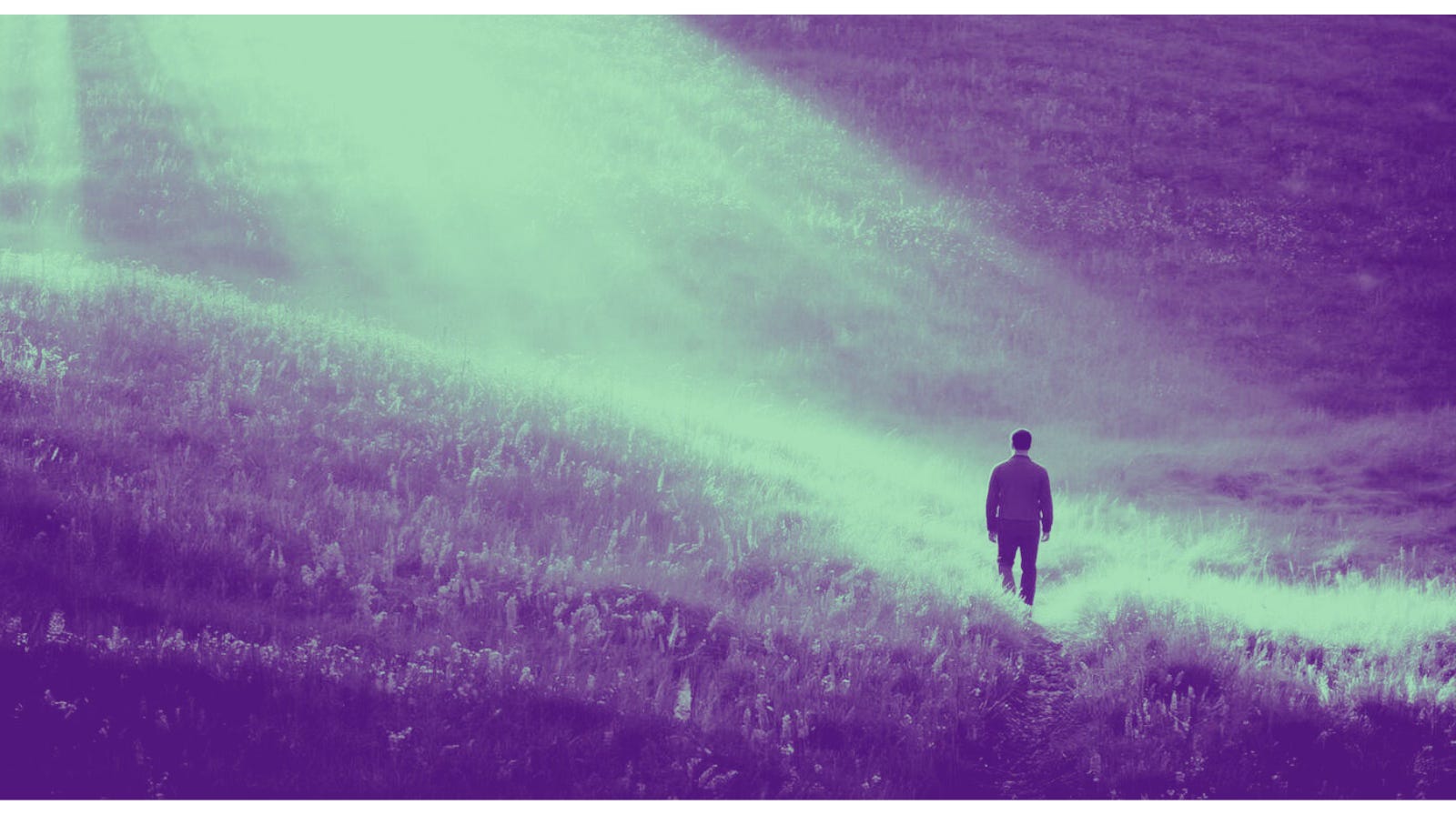
Nominated for the Nobel Prize for Literature in 1996, Thomas spent most of his life serving small, rural parishes far from anything flashy or important.
He was known for being difficult, private, and deeply conflicted. He was devoted to the Church, yet he was wary of its easy language about God. Thomas believed in God without hesitation, but he didn’t believe God was easily found or quickly explained.
As I read about him this past week, I stopped dead in my tracks when I read what former Archbishop of Wales Barry Morgan said about him:
“R. S. Thomas continues to articulate through his poetry questions that are inscribed on the heart of most Christian pilgrims in their search for meaning and truth. We search for God and feel Him near at hand, only then to blink and find Him gone.”
I am not alone, my heart sang, as I read this!
When Thomas penned the lines —
“I have seen the sun break through
to illuminate a small field for a while,
and gone my way and forgotten it.”
— he did not do so in shame. He doesn’t treat the experience of forgetting as a failure of faith or something we need to fix. He simply names it.
God showed up → I saw it & experienced it → I forgot
This sounds sad! I am sad as I think about details I can’t remember.
And do you know what else I am? Speechlessly overwhelmed that, knowing this, God keeps showing up over and over and over again.
Scripture, it turns out, has assumed this about us all along — that we are forgetters sometimes! We don’t do so out of malice or indifference. We do it because we are human and our memory can be fragile and because life keeps moving.
Stones for Forgetful People
Let’s talk about Joshua 4. God has brought the Israelites through wilderness and wandering and fear over the Jordan River. They’ve crossed over into something new and just when you might expect God to say, “Go! Take the land! Don’t waste a second!” — He tells them to stop.
He tells them to pick up stones.
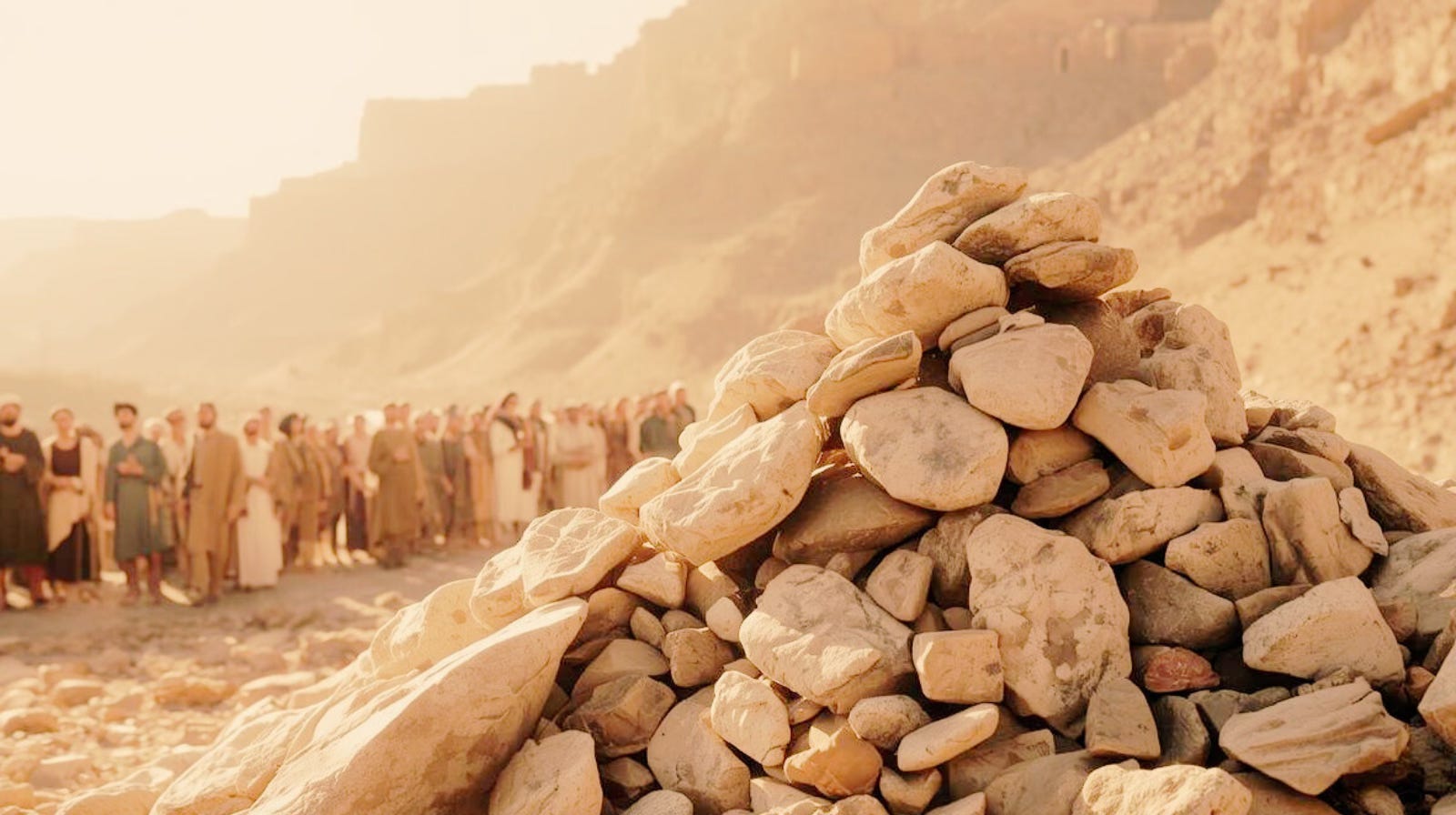
Twelve of them, one for each tribe. And God instructs them to carry these stones with them and set them up as a memorial. This is not because the people are especially faithful or because their memories are particularly sharp.
No, God does this because He knows what is coming next and he knows they will forget.
What strikes me is that God doesn’t scold them for this ahead of time. He doesn’t say, Try harder to remember what I’ve done.
Instead, He gives them something tangible to hold.
The Hebrew word used in this Joshua 4 passage for “remember” is zākar — and it doesn’t primarily mean mental recall. It means to mark, to make present, to bring something forward so it is not lost. Biblical remembering is often communal, physical, and practiced. It lives outside our heads.
Which feels like mercy to someone like me. It’s like a sigh of relief that God says it’s okay that sometimes we need external things to remind us of what He has done.
I don’t remember well. I remember that God has been good to me. I remember the long arc of it — the faithfulness, the care, and the love. But the details? They slip through my fingers.
Do you know where else we see this kind of grace? In Jesus!
When Jesus breaks bread with His friends before His arrest and crucifixion, He doesn’t say, “Feel this deeply” or “Make sure you remember every detail of tonight.”
Instead, He says,
“Do this in remembrance of me.”
The Greek word here is anamnesis — which doesn’t mean recalling information. It means something like making something present again. Re-entering a reality, participating anew.
In other words, Jesus doesn’t entrust His memory to their minds alone. He gives them a practice. Something repeatable and embodied and that they can hold when memory falters.
Bread. Wine. Again and again and again.
Seen this way, the stones by the Jordan and the table in the upper room belong together. Both the stones and this table of remembrance are God’s response to forgetful people. Both assume we might blink and miss things — and that it’s okay.
Which brings me back to R. S. Thomas.
“I have seen the sun break through
to illuminate a small field for a while,
and gone my way and forgotten it.”
Thomas doesn’t write this in shame. He doesn’t apologize. He simply tells the truth. God showed up, I saw it, I forgot.
And the world did not end.
God did not withdraw.
Grace did not evaporate.
What I think I am learning is that the invitation isn’t to fix our forgetting; instead, it’s to place a few stones along the way.
A Practice for When Memory Fails
This is my promise to myself this year: When God shows up, I do something about it. Maybe I:
Write a sentence in a journal, not because it’s profound, but because it’s true.
Tell a story out loud to someone else, so memory can live in community.
Repeat a prayer, even when the details are gone.
Hum a song that captures the moment God showed up.
Even as I wrote this, my 12-year-old son sat next to me and asked, “Why do you blog?”
My answer was simple: “To remember what God teaches me.”
And to hopefully encourage a few of you along the way.
Praise Jesus that He loves us forgetful, wayward, fragile people who are just trying to make our way in the world.
Next time He shows up to illuminate a field, I’ll be ready to capture it so that it won’t be forgotten.
Much love to you, friend.
❤️ Laurie
I love this Laurie! Remembering is both a unique challenge AND passion of mine. I need reminders, words, pictures, songs, etc all around me! Love your suggestion that when we share the story out loud, it can live in community. I have had friends who have remembered for me & told me my own story back - which is such a gift!!
Diolch Laurie, thank you very much for this, I find it reassuring in relation to my own memory! One small point: the line you’ve quoted is actually from ‘The Bright Field’ by RS Thomas. But his poem ‘The Other’ is also one of my favourites, maybe suitable for you to write another reflection?! Blessings🙏