
The Clock That Shouldn’t Still Be Ticking
An attempt to understand how ordinary people, bit by bit, keep repairing the faith they’ve been given — and pass it on.

In the heart of Prague, tucked into the face of the Old Town Hall tower, there’s a clock that shouldn’t have lasted this long.
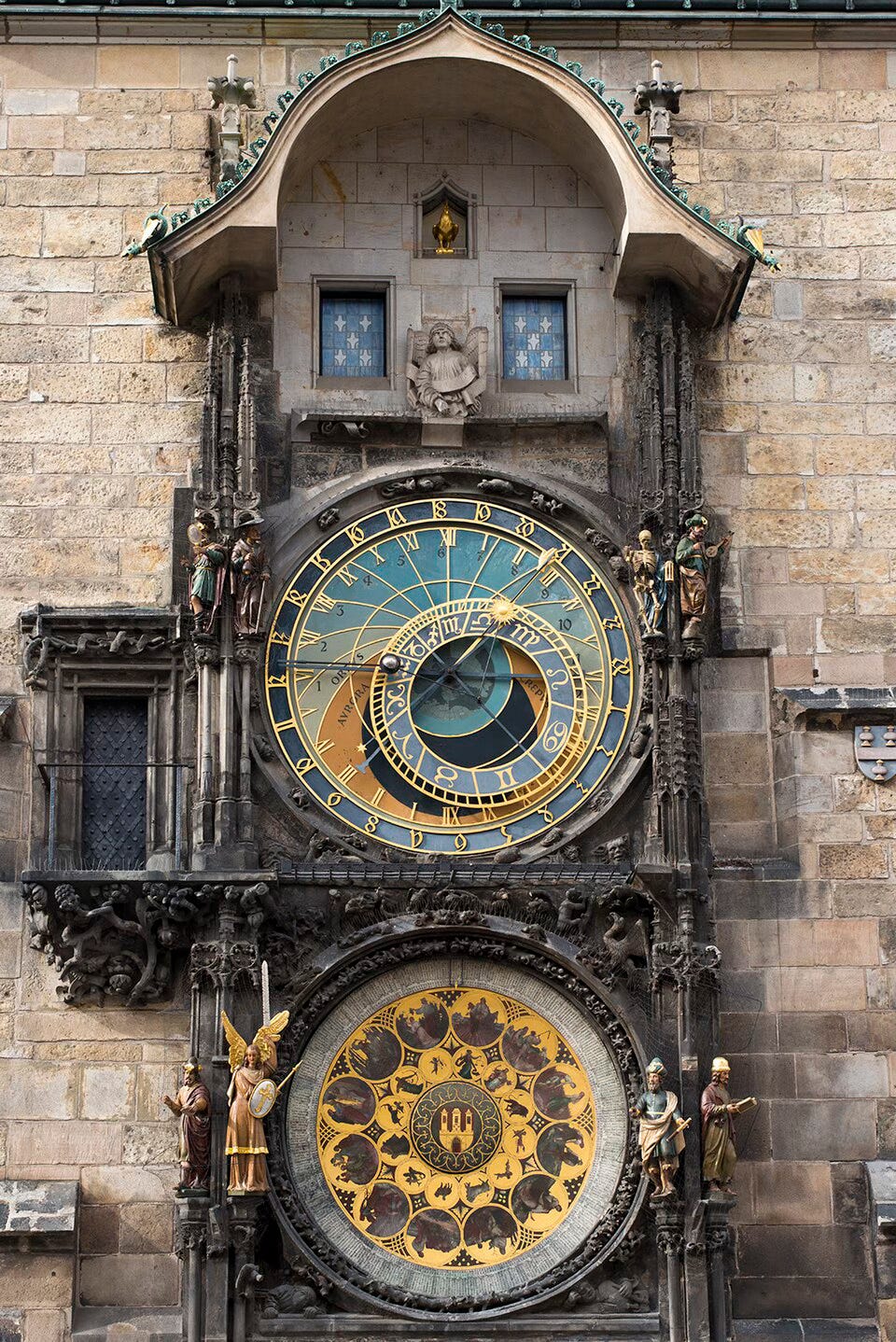
The Prague Astronomical Clock has been marking the hours since 1410.
That’s 615 years!
This is older than the printing press and the Reformation and the discovery of the New World.
And every hour — from morning to night — the clock is set into motion by one of the most haunting figures in medieval Europe: a skeleton named Death. Seriously, look at the pictures of the clock.
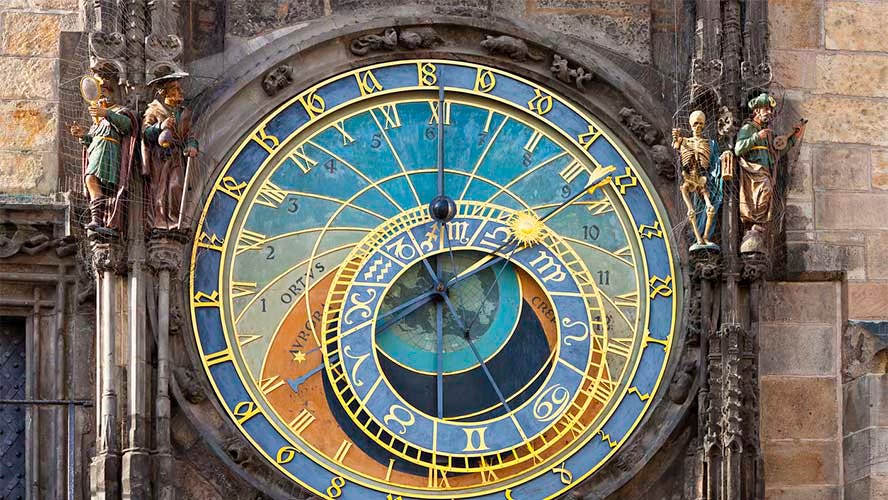
A carved wooden Death is holding an hourglass in one hand and a rope in the other. And every hour, he pulls the cord and nods his skull. Every hour, he strikes the time as if to say: Your life is finite! Time is not yours to control. Remember your mortality!
It’s rather unsettling, particularly in light of the joyful season of Advent that is drawing near!
But it’s also just a little bit comforting because even in the 1400s, people knew something important: Life is precious because it is brief, meaning is urgent because time is fragile, and faithfulness matters because our days are numbered.
But here’s the part that moves me most: The Prague clock didn’t survive this long because Death marked the hours.
It survived because generation after generation repaired it, refusing to let time — or war, or fire, or empire — destroy it.
In the medieval imagination, this wasn’t morbid; it was merciful. It was a way of saying: time is not yours to hoard. Life is not a given. Pay attention. Live wisely.
It is strange how seeing Death mark the hours can make you more alive to your own. I am still mulling this over days after first seeing the image of this clock.
Even What Is Beautiful Can Burn
The Prague clock has lived through more upheaval than seems possible for something made of wood and metal. In the final days of World War II, Prague was burning — not metaphorically, but literally — as German forces attacked the Old Town Square.
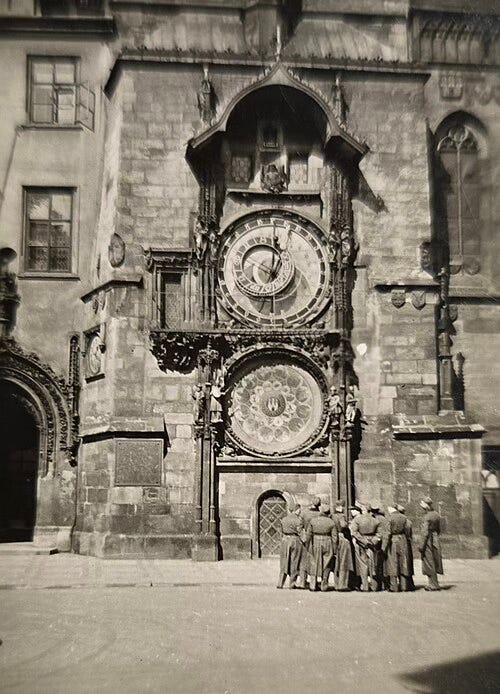
Fires climbed the tower walls, and the apostles sculpted on the clock were blackened in the heat and fell off. The gears cracked and the wooden panels burst into flame.
What had stood for over five centuries crumbled in a matter of hours.
The clock’s survival wasn’t inevitable. It didn’t endure because it was strong.
It endured because people thought it was worth saving.
Residents of Prague sifted through the ashes, gathering fragments of scorched metal and charred beams. They hid the pieces in their homes so they wouldn’t be discarded. They carried blackened gears in their coat pockets and stored broken wheels in drawers.
And remarkably, they rebuilt it. Piece by piece, they rebuilt it. They didn’t do this because they knew that the restoration would work; they did it because they knew what the clock meant.
Sometimes you rebuild things not because they are guaranteed to last, but because your soul needs you to try.
What You Preserve Shapes Who You Become
I think a lot about faith this way — not as a polished system that arrives fully intact, but as something handed down through the centuries by people who, in their own time and in their own way, chose to preserve what was most true about God. It arrives to us a little weathered, a little cracked around the edges, and shaped by the fingerprints of those who carried it before us.
And now, we must carry our part too, sometimes with confidence, sometimes with trembling, but always within the long story of God’s faithfulness moving through ordinary people.
Scripture itself is the record of those people — not perfect heroes, but men and women who had their own moments of confusion and weakness, yet somehow still became the ones who kept the flame alive for the next generation. Here’s a few examples:
Elijah, who stood almost alone on Mount Carmel against the prophets of Baal, insisting that Yahweh was still God even when Israel’s faith had been swallowed by fear. His boldness preserved the truth that God does not compete with lesser gods.
Hannah, whose prayer in the temple was not merely personal longing but an act of faith that recentered Israel’s story in the God who hears the oppressed. Her son Samuel would become the prophet who guided a wandering nation back to covenant faithfulness — but it began with her stubborn belief that God still listens.
David, who refused Saul’s armor and fought a giant with nothing but a sling. He did this not to showcase his bravery, but to remind Israel that deliverance comes from God alone.
Esther, who risked her life inside a palace she never asked to enter, preserving not only her people’s survival but their identity as beloved by God.
Joseph, who kept faith alive in a foreign land, preserving his family’s future even when betrayal and injustice might have tempted him to give up. Through him, Israel learned that God’s promises stretch across borders and circumstances and years.
And Paul — shipwrecked, imprisoned, and beaten — who carried the gospel farther than anyone imagined, uniting together fragile communities of believers across the Roman Empire. His perseverance ensured that the story of Jesus would outlive every empire that tried to silence it!
These people didn’t simply believe; they preserved something and kept the story moving forward.
And though each of them lived in wildly different circumstances, they shared a conviction that the faith they had received was worth passing on — that someone in the future would need what they were faithfully tending in the present.
Faith Needs Tending
What continues to draw me back to the Prague clock is the recognition that the clock has never survived because someone built it flawlessly and then sealed it in a museum-like state of preservation.
Rather, it has survived because generation after generation realized that something this intricate and meaningful could endure only through the slow, consistent attention of people who cared enough to notice when a wheel began to wobble, when a gear shifted out of alignment, or when the smallest part needed a touch of oil to keep moving.
And so they tended it with patience and devotion, fully aware that the well-being of the whole depended on the care of the smallest parts — small, but mighty.
I see faith in exactly this way — not as a grand structure that remains solid through sheer force of its own magnificence, but as a living, breathing mechanism of grace and hope and courage that continues in our lives only because we choose to keep an attentive eye on the parts of our souls that require care: the places that need forgiveness or gentleness or rest or that need to be realigned with mercy.
In some seasons, we may carry our faith with steady, almost effortless confidence, moving through with a sense of God’s nearness that feels as natural as breathing.
But in other seasons, we may carry it as though we are protecting a fragile heirloom that seems to crack a little more each time life shakes us. And in still other seasons, we may simply hold the faith we have left, however small or unsteady, trusting that God sees the faithfulness in our trying.
Tending our faith in these ways is rarely dramatic or glamorous, and it seldom resembles the grand scenes of Scripture we imagine when we think about spiritual heroes.
Instead, it looks like choosing to read a few verses even when our minds wander, or whispering a prayer in the car because we cannot quite form a longer one, or walking back into a church building after a long stretch of absence because something in us hopes that God still meets people in ordinary places.
These are the kinds of quiet, slow, almost invisible acts that keep the mechanism running — the ones that do not draw attention to themselves but that matter profoundly, because without them everything begins to lose its rhythm.
And just as the clock in Prague stands today not because it was untouched by fire or protected from disaster, but because people tended it long after the flames died down and the ashes cooled, our faith continues not because we have avoided hardship or confusion, but because we keep returning to what matters, trusting that the God who holds the whole world together can surely hold the small, trembling pieces of our spiritual life as well.
God Holds Our Time
There is something deeply humbling about seeing that wooden skeleton lift its tiny arm to strike the Prague bell each hour. It reminds me that life is limited, our days are numbered, and our plans are always more fragile than we realize.
But when the psalmist declares, “My times are in your hands,” he is speaking not only of his lifespan or his circumstances, but of the entire arc of his existence — the moments that felt triumphant and humiliating, and the long stretches in between.
We must, after all, dear friends, believe that all of our moments are gathered into the hands of a God who is neither surprised by our limitations nor impatient with the pace at which we grow.
And perhaps that is the quiet invitation of this ancient clock: not to obsess over time or fear its passing, but to notice it — to recognize that each hour is a chance to attend to the inner work God is doing in us, to tend what is in front of us, to relinquish what we cannot fix, and to trust that God remains faithfully present in every moment, even the ones that feel hollow or unfinished.
You Keep the Story Alive!
So here we are ending 2025 and nearing another year.
Every generation before us has faced its own fires — some devastating and visible, like the flames that nearly consumed the Prague clock in 1945, and some hidden and inward, like the seasons of disillusionment, fatigue, or upheaval that threaten to burn down the inner structures of faith.
Yet somehow, the story of God has continued. This is not because any one generation was particularly strong or brilliant or unwavering, but because someone in every generation decided that the faith they had received was worth tending to for the sake of those who would come after them.
And this is the truth that both humbles and steadies me: We — you and me —now stand in that same lineage.
The story of God continues not because any one generation is particularly strong or brilliant or unwavering, but because someone in every generation decides that the faith they have received is worth tending to for the sake of those who will come after them.
We, of course, are not being asked to preserve the whole story — that is God’s work, and God has been doing it since long before we arrived. But we are being invited to tend the small portion of faith entrusted to us, to carry our own piece of the mechanism, and to nurture the love and hope and mercy that have been placed in our care.
You, dear friend, need to believe that the way you walk with God in your lifetime will become, in ways you may never see, part of the story someone else needs.
You do not have to do this perfectly or without questions. You simply have to be willing to give your attention, honesty, and hope to the small piece of faith you have been handed, trusting that God honors even the most hesitant attempts to keep the story moving.
And perhaps one day, long after your own hours have passed, someone will discover that their faith is still ticking — quietly, steadily, and unexpectedly — because of the way you tended your part of the story, the way you carried what you were given, the way you repaired what you could, and the way you trusted God to hold everything you could not.
♦️ SIDEBAR: How You Can Carry the Faith in This Season
And because Advent is so near, I want to name a few ways that you can carry the faith in our generation.
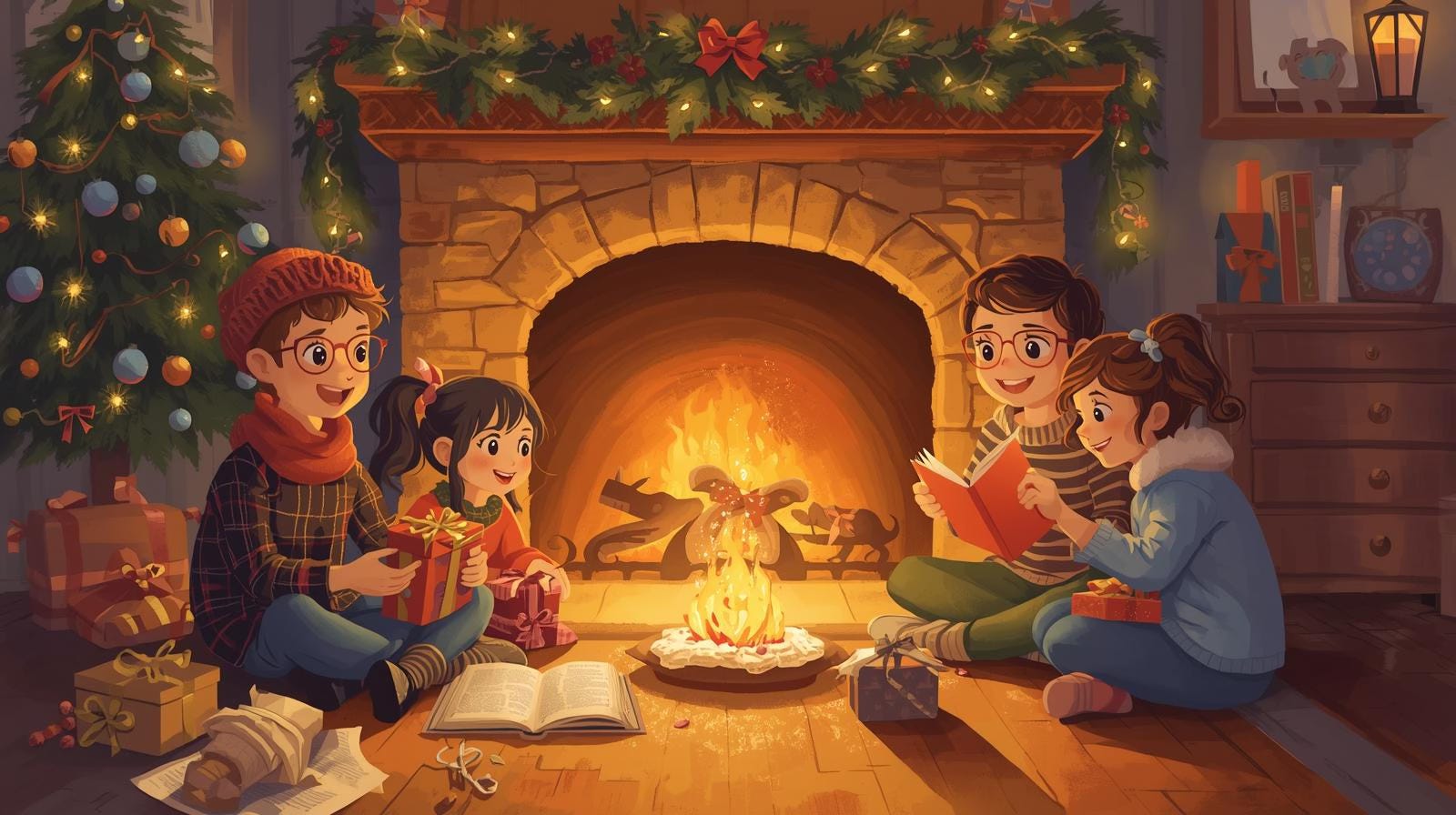
These are small, simple practices that echo the quiet, faithful work of the people who tended the clock and the saints who tended the story before us:
Lighting a candle at dusk and whispering even the briefest prayer, trusting that small prayers still move the heart of God.
Practicing slow noticing, letting yourself see God in small beauties — a warm kitchen light, a child’s laughter, a quiet snowfall — as a way of remembering that God dwells in the ordinary.
Choosing mercy, remembering that Christ came not to win arguments but to heal what was broken.
Reaching out to someone who is lonely, offering presence without pressure to fix anything.
Honoring rest as a spiritual act, especially in a season of frenzy, trusting that God does not need your productivity to keep the world turning.
Returning to Scripture slowly, not to conquer chapters but to listen for one phrase or one word that reminds you who God is.
Letting joy in through a small doorway, celebrating something ordinary — a good meal, a meaningful conversation, a moment of laughter — as a defiant form of hope.
Allowing yourself to hope again, even cautiously, even with repaired hope rather than new hope, because Advent is the season of beginnings that seem impossibly small.
None of these things will look dramatic or heroic. None will make headlines or impress anyone. But each will help keep the story alive for someone who will need it later.
❤️ I love you, friends.
Laurie
A helpful encouragement that even little things done in faith matter more than we realize.